 Copywriting
by Jef van de Graaf
#002
Why I hate buyer personas
Wednesday, 1:37 p.m.
August 5, 2026
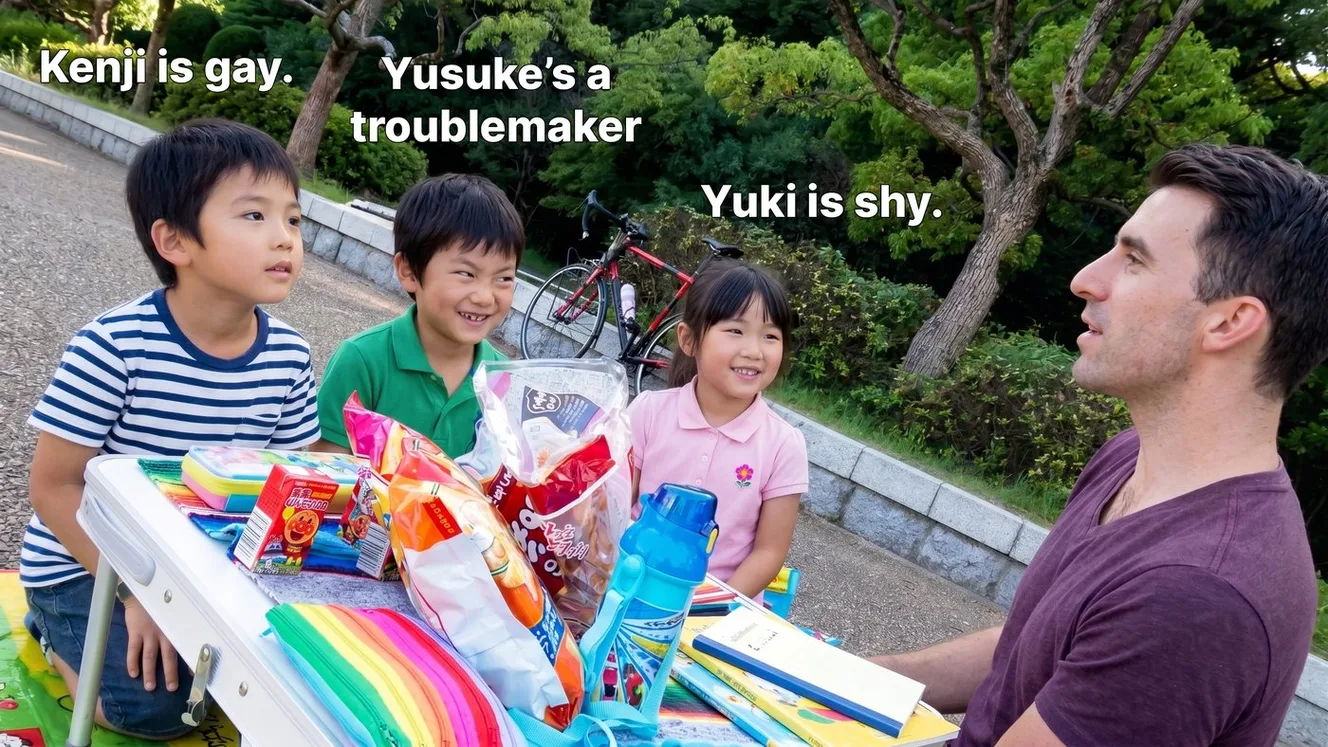
When I was a brand-new English teacher in Japan, one of my colleagues pulled me aside before my very first class. She wanted to give me a run-down of the student roster.
She leaned in close, tapped the paper, and started labeling the kids before I’d even had a chance to say hello.
“Watch out for Yusuke, Jef! He’s a troublemaker.”
“You probably won’t hear a word out of Yuki, she’s shy."
“And just so you know, Kenji is gay.”
Just like that, I was handed a box, forcing these living, breathing human beings into rigid little categories.
“Oh, by the way, Jef, we don’t know for sure if Kenji’s gay. We just see him, you know, acting a certain way around other male teachers. What do you think? Is it possible for a boy that young to be gay or no?”
Before I ever got a chance to meet these kids, their stories were already written.
This experience reminded me of a famous educational legend about a substitute teacher who found a list of high numbers next to her students’ names in a desk drawer. Believing she had been handed a classroom of hidden geniuses, she completely ignored their “troublesome” reputations. She threw out the basic worksheets, challenged them with elite lessons, and held them to an impossibly high standard.
At the end of the semester, their test scores shattered school records.
When she proudly told the principal that her students lived up to the high IQ scores in her desk, the principal gasped.
“Those aren’t IQ scores,” he said. "Those are their locker numbers."
The “Locker Number” Trap in Modern Marketing
As businesses, we do a similar thing to our audience all the time.
We look at spreadsheets, analytics dashboards, and create hypothetical “buyer personas.” We study past data and we apply cold, conclusive labels to human behavior before we ever write a headline or campaign.
“Our leads are cold and unresponsive.”
“Our audience is too skeptical to buy this premium tier.”
“Our market is just looking for the cheapest option.”
And just like my colleague’s roster, these personas mix real behavioral predictions with irrelevant gossip. “Marketing Manager Mary, age 34, likes coffee” tells you nothing about how Mary buys or why — she’s now placed into a box before she ever gets a chance to tell you herself.
When this happens we end up writing defensive, boring, or transactional copy that treats them exactly like those labels. We write down to their supposed limitations in the hope of "meeting our buyers where they’re at."
In other words, we write copy based on their locker numbers.
Self-Fulfilling Positioning
If you treat your audience like penny-pinchers, you will write copy that focuses entirely on discounts—and you will attract a roster full of nightmare buyers who fight tooth and nail for the lowest price.
Behavioral scientists call this the Pygmalion Effect.
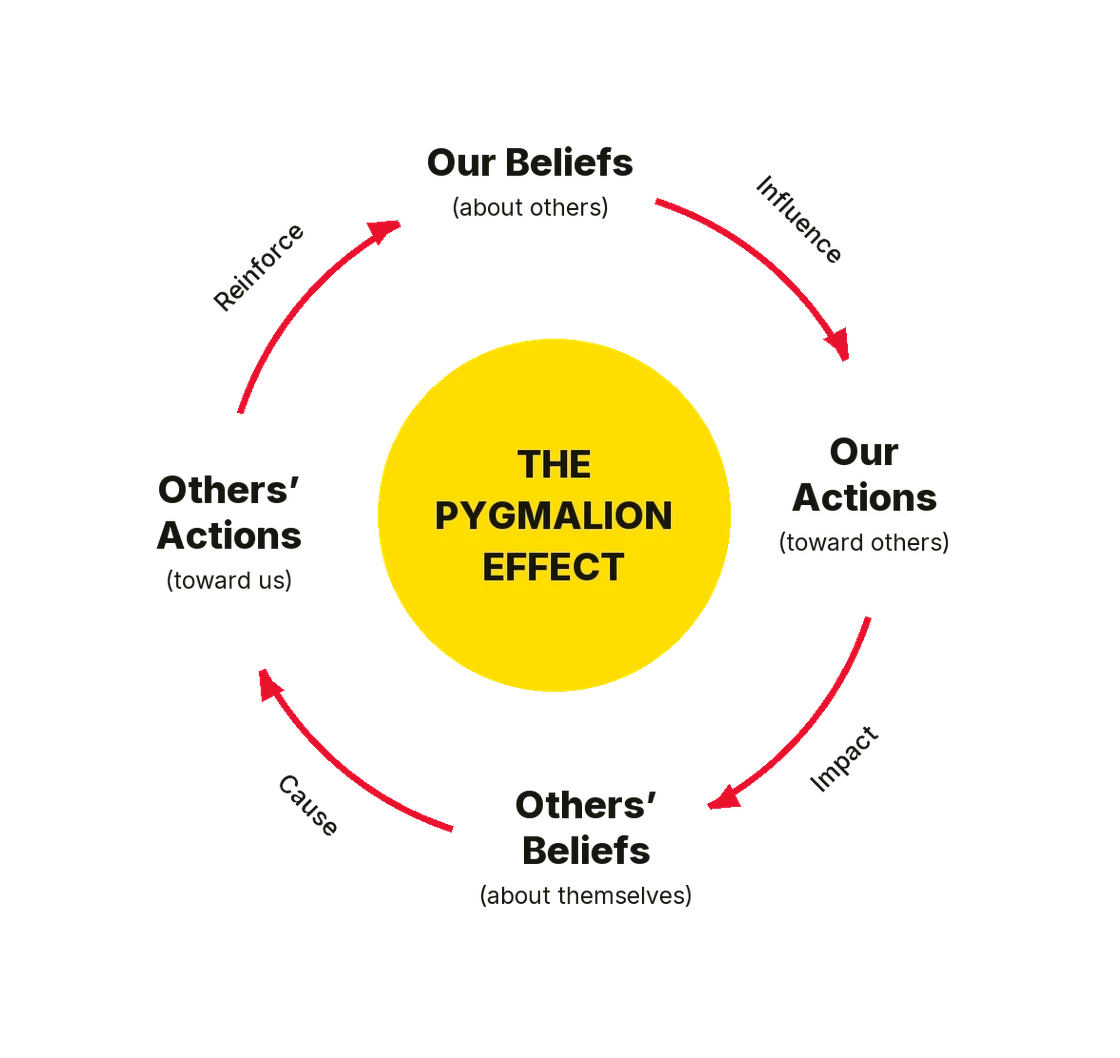
In workplace and educational studies, researchers found that when an authority figure holding high expectations alters their language, it changes the recipient’s self-efficacy. This means the target subconsciously alters their behavior to match the belief system of the person speaking to them.
In marketing, your copy is that authority figure.
Every headline, email, and sales page you write projects a set of expectations onto your reader. When you lower the ceiling of your words to match a flat data sheet or a cynical buyer persona, you lock your message around their worst behavioral habits. You teach them to be skeptical. You train them to look for the discount.
But if you change the expectation of the copy, you can change the behavior of the buyer.
From Locker Numbers to Aspirational Copy
Let’s say you are selling a premium B2B service or consulting package. If you look at the data and assume your market is price-sensitive and hesitant, here is the headline that data produces:
“Grow your business without breaking the bank — no long-term contracts, cancel anytime.”
This leads with fear and reassurance, which might work, but also attracts price-sensitive buyers.
Now, here is the exact same service, written to the person your buyer is trying to become:
“Strategic growth systems for founders ready to scale to 7-figures.”
Now we’re speaking to who they’re trying to become.
If you want to avoid writing to a rigid identity box based on past data (or gossip), start writing in a way that guides people toward the highest possible standard (or, from a copywriter’s lens: their most desirable outcome).
Here is how you can apply that to your copy:
Identify their ambition, not just the friction: Stop focusing only on what they are running away from. Frame your solution around the outcome they are desperately running toward.
Elevate the baseline: Address them as the expert they want to be, not the frustrated buyer they are today. If you want them to act like premium buyers, speak to them like they already are.
Command the narrative: Frame your offer not as a lifeboat for the desperate, but as a system for the ambitious.
When you raise the expectation of your messaging, you can influence buyers in your favor. The “skeptical” lead becomes a deeply invested believer. The “silent” lurker turns into your next highest-paying client.
So, the next time you’re handed a buyer persona—or told a student is troublesome, shy, or gay—assume you’re looking at their locker number.
Then treat them like a genius, and watch them prove you right.
To your success in business (and life),
 The human behind
HX Copywriting
p.s. Sometimes you do have to meet buyers where they are. A burned, skeptical market needs proof before it accepts a promise. It’s why the oldest formula in copywriting starts with Problem and Agitation before it ever gets to Solution. But meeting them where they are is a starting point, not a destination. More on that in a future letter.
p.p.s. And for goodness sake, please stop labeling kids who are learning, growing, and trying damn hard to find their footing in this wild, ruthless world.